


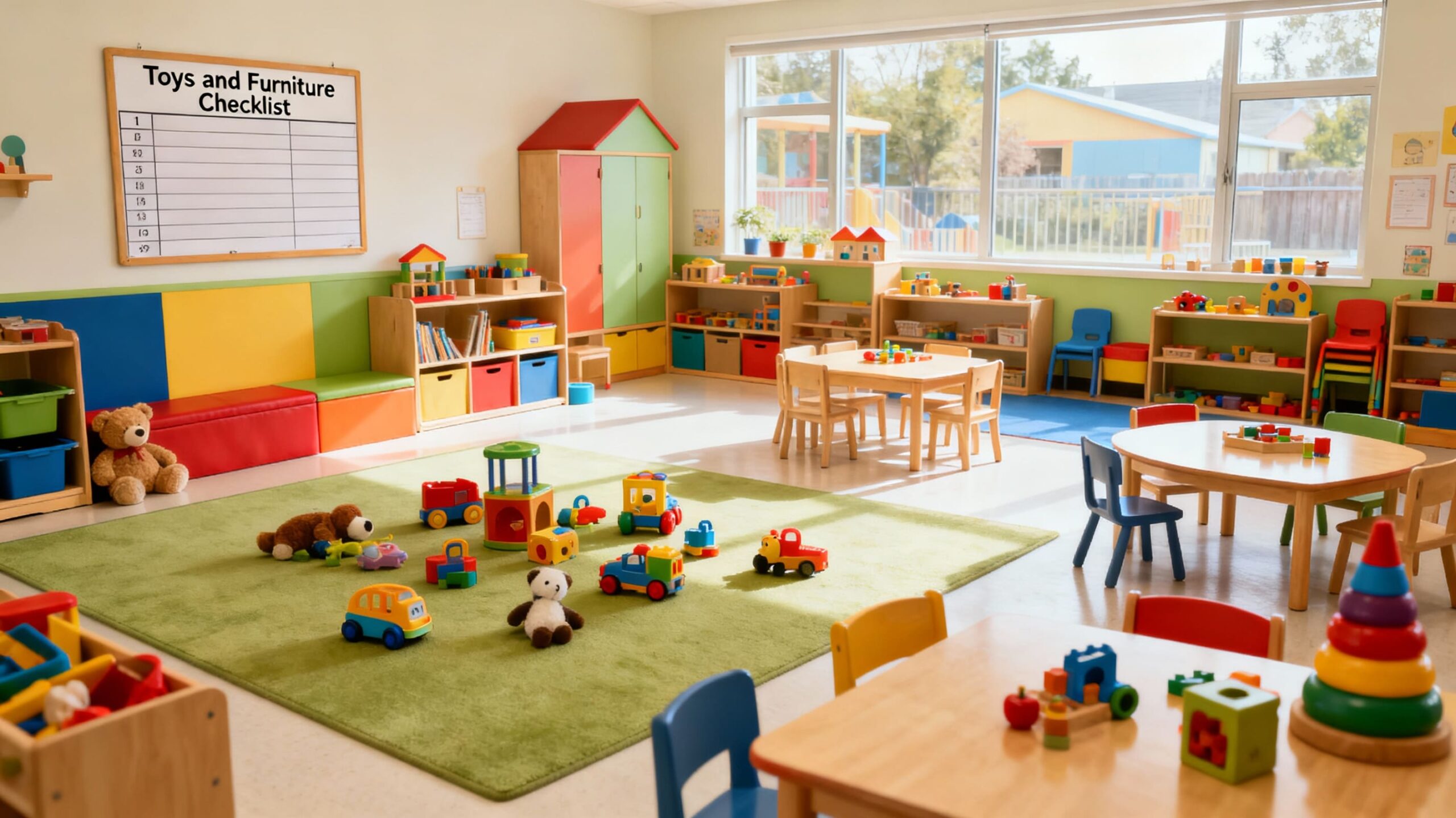
Preschool Classroom Setup in India: Toys and Furniture Checklist for New School Owners
Setting up a new preschool or play school classroom in India is exciting, but the number of decisions about toys, furniture and preschool materials can feel overwhelming.
A clear, prioritised preschool toys list and playschool furniture checklist helps you invest wisely, create a safe environment, and stay aligned with NEP‑2020 and NCERT guidelines for early childhood education.
This guide is written especially for independent preschool owners who want to design a child‑friendly classroom without franchise support, using practical lists of toys and furniture for a new preschool or play school.
Start with the vision before purchasing preschool materials
Before spending on preschool materials, toys and furniture, it is important to be clear about what you want the classroom to do for children.
NCERT recommends that preschool environments should be safe, welcoming, flexible and rich with materials that support play, exploration, language, early math and social interaction.
In simple terms, a good preschool classroom in India should allow children to move freely with child‑sized playschool furniture and open floor space for play.
It should offer different corners for activities such as free play, art, story time, pretend‑play, blocks and quiet reading, each equipped with suitable preschool materials.
Materials should be visible and reachable so children can choose and put back toys independently, building ownership and responsibility from the start.
With this vision in mind, you can build your preschool toys list and furniture plan in a structured way instead of doing random shopping based only on catalogues.
Essential playschool furniture for Indian classrooms
Child‑sized tables and chairs
Child‑sized tables and chairs are the backbone of any playschool furniture plan because they are used for meals, activities, art and small‑group work.
Look for sturdy sets with rounded edges, non‑toxic finishes and heights that match the age group, keeping lower furniture for Playgroup and slightly higher sizes for LKG and UKG.
Rectangular tables work well for group activities, while round or horseshoe tables support small‑group teaching and counselling with better visibility.
Plastic or laminated surfaces that are easy to wipe are practical for Indian classrooms where art, clay and food are part of daily routines.
Low shelves and storage units
Low open shelves are essential playschool furniture items because they store toys, books and learning materials at child height.
This supports independent choice, tidy‑up routines and quick visual checks by teachers when they scan the classroom.
Use separate shelves for blocks, art, puzzles, pretend‑play sets and books, and add picture labels or coloured bins so even younger children know where each preschool material belongs.
Lockable cupboards or cabinets are required for teacher materials, cleaning agents, medicines and any items that must stay out of children’s reach.
Mats, carpets and soft seating
Circle time and story sessions work best on floor mats or carpets where children can sit together comfortably.
Choose non‑slip mats that are easy to roll and clean, and avoid very thick carpets that trap dust, which is a practical concern in many Indian cities.
Add a few cushions or small bean bags in a reading corner to invite children to sit with books, puppets or soft toys.
Soft seating also helps shy or anxious children feel more relaxed during their early days in the classroom.
Cubbies, bag racks and shoe racks
Every child needs a fixed place for their bag, water bottle and sometimes shoes, especially in Indian preschools where footwear is often removed at the door.
Simple cubby units, bag hooks at child height and shoe racks near the entrance make arrival and dispersal smoother and more organised.
Label each space with the child’s name and photo in Playgroup and Nursery to build a sense of belonging and help children recognise their own spot.
Teacher’s table, noticeboards and display areas
A small teacher’s table and chair provide space for planning, record‑keeping and speaking privately with parents.
At least one soft board or magnetic board is needed to display children’s work, photos, routine charts and announcements for parents.
Display boards are not just decoration; they show parents what children are learning and make the classroom feel alive and child‑centred.
Preschool toys list: must‑have learning materials for new schools
Construction and manipulative toys
Blocks and construction materials are among the most powerful items in any preschool toys list.
Invest in a good set of wooden or high‑quality plastic blocks, stackers, shape sorters, pegboards and interlocking bricks for your toys and furniture plan.
These toys support fine‑motor skills, hand‑eye coordination, spatial understanding, creativity and early math concepts such as size, shape and balance.
Store them in open baskets or bins on low shelves so children can freely choose and combine materials during free play.
Puzzles, games and early math materials
Age‑appropriate puzzles are essential preschool materials for cognitive development.
Knob puzzles work well for Playgroup, simple four‑ and six‑piece puzzles suit Nursery, and more complex jigsaws fit LKG and UKG levels.
Add alphabet and number puzzles, picture matching games and sorting activities where children classify by colour, size or type.
For early math learning, your preschool toys list can include counting bears, number rods, pattern blocks, threading beads and simple measuring tools.
These materials make math concepts concrete and playful instead of abstract and worksheet‑driven, which is what NCERT encourages for early years.
Books, story props and language materials
A strong library corner should be part of every toys and furniture plan for new preschools.
Collect picture books, board books and storybooks in English and local languages, covering themes like family, animals, festivals, emotions and everyday routines.
Add story props such as puppets, flannel‑board pieces and simple masks to make storytelling interactive and memorable.
For pre‑literacy, keep alphabet cards, letter mats, rhyming cards and early writing boards or sand trays, but avoid pushing formal writing in the youngest groups.
Pretend‑play and role‑play toys
Pretend‑play sets are especially important in India because children enjoy acting out familiar roles from home and community.
Useful preschool materials include a toy kitchen with utensils, fruits and vegetables, a doctor set, market or shop props, a toolbox and simple household items.
Include dolls, doll clothes, soft toys and dress‑up accessories such as caps, dupattas, bags and simple costumes linked to Indian life.
Role‑play develops language, social skills, problem‑solving and creativity, and it naturally connects to Indian festivals and cultural themes.
Art, craft and sensory materials
Every preschool classroom needs a basic art and craft kit as part of its preschool materials list.
Start with crayons, jumbo pencils, sketch pens, glue sticks, child‑safe scissors, coloured paper and chart paper.
Add extras like stickers, stamps, stencils, sponge brushes and old magazines for collage work and creative exploration.
For sensory play, stock non‑toxic dough or clay, rollers, cutters, moulds and simple sand‑ and water‑play tools such as buckets, mugs, funnels and sieves.
These experiences build fine‑motor strength, imagination and sensory integration, which are strongly recommended in early childhood guidelines.
Gross‑motor equipment for small preschool spaces
Many Indian preschools have limited outdoor space, so indoor gross‑motor equipment becomes a critical part of toys and furniture for a new preschool or play school.
For small rooms, choose compact items like small slides, see‑saws, soft play blocks, tunnels and balance beams that can be moved or stacked when not in use.
Add balls in different sizes, hoops, cones, bean bags and simple game props to organise group games and movement activities.
Ride‑on toys, rockers and push‑pull toys are very useful in Playgroup and Nursery to build balance and coordination.
Always check weight limits, stability and finishes; preschool furniture and play equipment should be sturdy, have rounded edges and be made from durable materials.
Safety and ergonomics: non‑negotiable for playschool furniture
Indian and international early childhood guidelines emphasise that safety and ergonomics are core parts of quality in preschool environments.
When finalising your playschool furniture and preschool toys list, keep some basic safety points in mind.
All furniture should have rounded corners, smooth edges and stable bases; avoid sharp metal parts and wobbly chairs or tables that may tip.
Use non‑toxic, lead‑free paints and finishes, and check that plastic items are child‑safe and free from harmful chemicals.
Avoid tiny parts and easily detachable pieces in toys for children under 3 years to prevent choking hazards.
Fix tall shelves to the wall where possible so they cannot tip if a child tries to climb on them.
Cover electrical points, use corner guards where necessary and ensure there is good ventilation and natural light in the classroom.
Following these basics reduces accidents and reassures parents when they visit your preschool for admission and classroom tours.
Budget‑wise planning: what to buy first for a new preschool
New preschool owners often ask what to buy in Year 1 and what can wait for later expansion.
A simple approach is to think of your toys and furniture for a new preschool in three layers: must‑have in Year 1, good‑to‑have in Year 2 and premium add‑ons afterwards.
Must‑have items in Year 1 include child‑sized tables and chairs, low shelves, mats, a basic teacher table, core preschool materials like blocks, puzzles, basic books, pretend‑play sets and a small set of art and sensory supplies.
Good‑to‑have items in Year 2 might add a larger library, more advanced construction sets, additional gross‑motor equipment and extra storage units.
Premium add‑ons can be thematic playschool furniture, branded soft‑play units, advanced classroom décor and technology such as interactive boards, added only when admissions and cash flow are stable.
This phased strategy is ideal for independent, non‑franchise preschools that want to grow steadily while staying financially careful.
Linking preschool materials to curriculum and daily routine
Your preschool toys list and playschool furniture choices should always reflect your curriculum and timetable, not sit as disconnected items.
NCERT’s preschool curriculum suggests planning activities across physical, language, cognitive, socio‑emotional and creative domains, and your classroom corners should mirror these goals.
For example, the block corner boosts math and problem‑solving, the art corner supports creativity and fine‑motor development, the book corner nurtures language and listening, and the pretend‑play area builds social understanding and communication.
When parents visit, you can walk them through each corner and explain how specific preschool materials support learning, which builds strong confidence in your independent preschool.
How Preschool Mitra can support your preschool setup
Choosing the right preschool toys list and playschool furniture is not just about buying products; it is about designing a learning environment that matches your vision and curriculum.
Many new preschool owners in India feel lost between vendor catalogues, online lists and franchise showrooms, and are unsure what is genuinely needed in Year 1.
Preschool Mitra focuses on helping independent preschools with structured, ready‑to‑use solutions instead of leaving you to figure it all out alone.
Along with NEP‑aligned curriculum books, admission forms and planning calendars, Preschool Mitra can provide a focused Preschool Classroom Setup Checklist for India that breaks down toys and furniture for a new preschool or play school by room, age group and budget phase.
For aspiring and new owners, the ₹1,499 “Start a Preschool Without Franchise” session includes a guided walkthrough of this checklist, vendor‑selection tips and examples from successful independent schools using similar preschool materials.
By combining the right toys and furniture with strong curriculum and documentation, Preschool Mitra helps your preschool look and function like a well‑organised, child‑centred institution from day one